Puget Sound Salmon Habitat Indicators
Measures of ecosystem conditions in salmon habitats
Salmon are a cultural icon of the Pacific Northwest. They are highly prized by anglers and commercial fishermen, are guaranteed to be available to Indian Tribes by treaties signed with the federal government, and are a favorite food of Southern Resident orcas.
Many Puget Sound salmon populations are threatened under the Endangered Species Act. The Salmon Vital Sign tells us about the health of salmon populations.
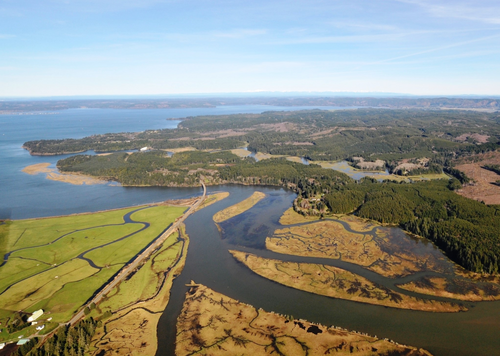
Salmon use many different habitats during their life cycle. They move from rivers to estuaries to the ocean, and back again. Healthy habitats along the way help salmon to feed, grow, rest, avoid predators, and spawn. Natural changes and human activities impact the quality and quantity of healthy habitat.
Puget Sound Salmon Habitat Indicators measure the health of habitats across Puget Sound that are important to salmon.
Explore all Salmon Habitat Indicators
Related Progress Indicators
Throughout their life cycle, salmon depend on a wide variety of freshwater, estuary, nearshore, and marine habitats. This leaves salmon vulnerable to many forms of human activities.