

Columbia Basin Fish & Wildlife Program
An unprecedented view into the region’s fish & wildlife mitigation.
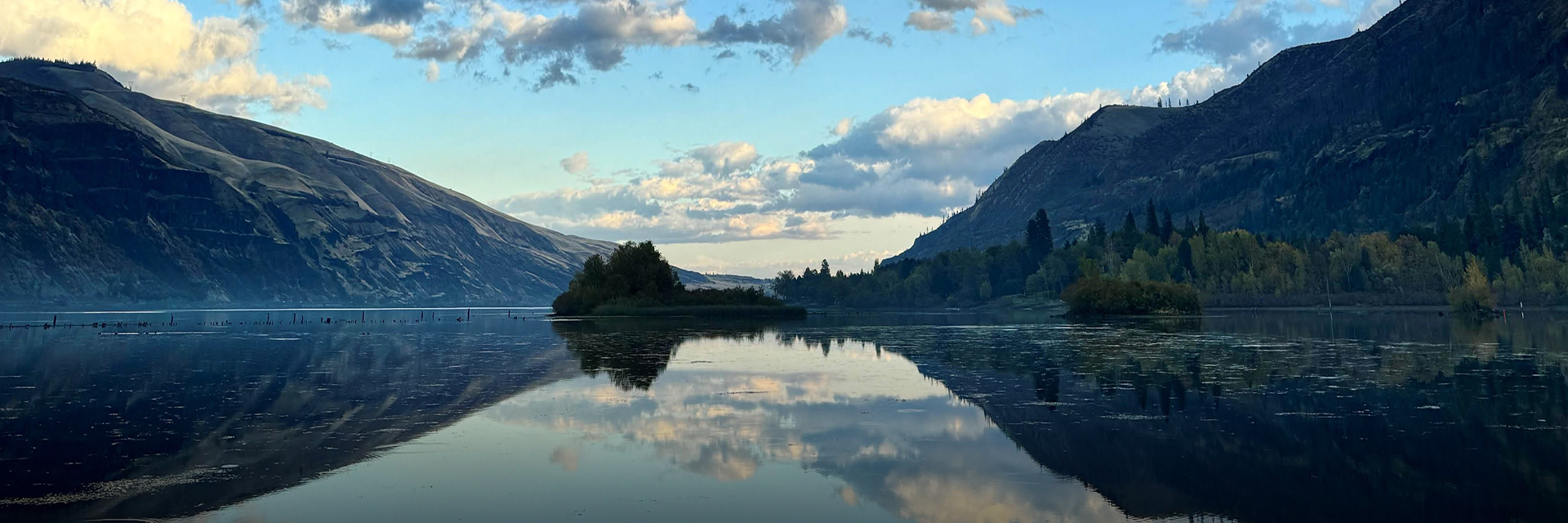
Photo: Rob Meyers / BPA
Welcome to the Columbia Basin Fish & Wildlife Program
Bonneville Power Administration funds work to protect and restore the fish and wildlife affected by hydroelectric dams on the Columbia River and its tributaries. CBFish tracks that work — the projects, the contracts, and what they achieve — across Idaho, Montana, Oregon, and Washington.
- 301ProjectsActive this fiscal year
- 633ContractsActive this fiscal year
What the program has delivered since 2005
Select any total to see where it happened and the contracts behind it.
How the results have grown
Twenty years of cumulative results. Pick a measure, then move the fiscal-year slider or point at the chart to see any year.
- Added in FY25
- +35,722
- Average per year
- 50,476
- Added in FY25
- +491
- Average per year
- 467
- Added in FY25
- +50,872,015
- Average per year
- 100,000,000
- Added in FY25
- +19,041
- Average per year
- 26,905
Results across the basin
Since 2005, in Idaho, Montana, Oregon, and Washington. Choose a measure, then select a state.
Where the results come from
Each block is sized by its share of the total since 2005. Select a block to see the contracts behind it.
- 48% Tributary habitat Restoring streams, side channels and streamside areas where salmon and steelhead spawn and rear. 512,000 acres
- 32% Wildlife mitigation Habitat protected for wildlife to offset lands lost to dam construction and reservoirs. 341,000 acres
- 12% Mainstem habitat Shoreline and off-channel habitat along the Columbia and Snake rivers. 129,000 acres
- 7% Resident fish Habitat for fish that live in the basin year-round, such as bull trout and sturgeon. 78,000 acres
- 55% Levee breach and setback Opening or moving levees so tides and river flows reach the floodplain again. 5,400 acres
- 27% Tide-gate replacement Fish-friendly tide gates that let young salmon reach tidal marshes. 2,600 acres
- 18% Culvert and channel work Removing barriers and reopening tidal channels through former wetlands. 1,800 acres
- 39% Spring Chinook Juveniles released to rebuild and supplement spring-run Chinook salmon. 820 million fish
- 29% Fall Chinook Juveniles released for fall-run Chinook salmon. 610 million fish
- 19% Steelhead Juvenile steelhead released into tributaries across the basin. 390 million fish
- 13% Coho and other Coho reintroduction plus sockeye, sturgeon and resident fish releases. 280 million fish
Results at everyday scale
What twenty years of work adds up to, measured against places people know. Open a row to see it.
-
Habitat: 1.06 million acres, about 20 times the size of the city of Seattle.
Each shape is the size of the city of Seattle, about 53,600 acres
-
Estuary floodplain: 9,800 acres, about 64 times the size of Ann Morrison Park in Boise.
Each shape is the size of Ann Morrison Park in Boise, about 153 acres
-
Fish produced: 2.1 billion fish, about 136 for every person living in the four program states.
Each dot is one fish: 136 for every person living in the four program states
-
Wildlife lands: 565,000 acres, about 90% of the size of Siuslaw National Forest.
Each shape is the size of Siuslaw National Forest, about 630,000 acres
Comparisons use approximate public sizes and are computed from each total.
Current metrics
One year's results next to the running total since 2005. Choose a fiscal year; select a row for its contracts.
| Area | Description | FY25 | Since 2005 | Trend, FY05 to FY25 |
|---|---|---|---|---|
| Tributary habitat restoration | Acres of habitat protected or improved | 35,722 | 1,060,000 | |
| Estuary habitat restoration | Acres of estuary floodplain reconnected | 491 | 9,800 | |
| Hatchery production | Fish produced by program hatcheries | 50,872,015 | 2,100,000,000 | |
| Wildlife mitigation | Acres of land protected for wildlife | 19,041 | 565,000 |